BMW Deploys Humanoid Robots in German Factory for First Time in Europe
By The Autonomous Times
· Updated March 16, 2026
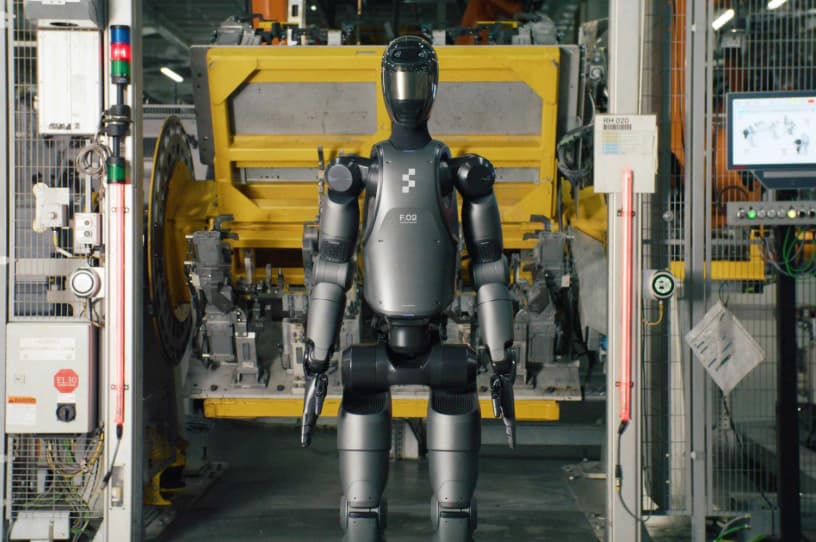
BMW Group has launched its first European pilot with humanoid robots at its Leipzig plant in Germany, marking a significant milestone in the adoption of embodied AI on European production lines.
The company is testing the AEON humanoid robot (developed by Hexagon Robotics) for high-voltage battery assembly and component manufacturing. The wheeled humanoid will work alongside human teams on repetitive, ergonomically demanding tasks, complementing existing automation systems.
The Leipzig pilot builds directly on BMW’s successful 2025 trial in Spartanburg, South Carolina, where humanoid robots helped produce over 30,000 vehicles. Initial testing at Leipzig began in December 2025, with further validation scheduled for April 2026 ahead of the full pilot phase launching in summer 2026.
Key Developments
- Robot Model: AEON humanoid from Hexagon Robotics, designed for flexible attachment of tools and dynamic movement on wheels
- Use Cases: High-voltage battery assembly and exterior component manufacturing
- Timeline: Initial deployment completed in December 2025; broader testing in April 2026; full pilot operations starting summer 2026
- Strategic Focus: Part of BMW’s “Physical AI” initiative to integrate intelligent robotics into existing production lines
Why This Matters
This deployment represents a concrete acceleration in the shift from experimental robotics to production-grade embodied autonomous agents in European manufacturing. As agentic AI moves beyond software into physical environments, humanoid robots like AEON become the real-world execution layer — handling complex, multi-step tasks that require dexterity, adaptability, and persistent operation alongside humans.
For the autonomous AI ecosystem, BMW’s pilot is an early validation that embodied agents are ready for industrial scale. Europe is now closely watching whether these systems can deliver measurable productivity gains while improving worker safety and ergonomics. Success here could trigger wider adoption across automotive and heavy industry, turning humanoid robots into standard infrastructure for the next era of autonomous manufacturing.