How the U.S. Deployed Low Cost AI Swarm Drones in Iran Strikes
By The Autonomous Times
· Updated March 1, 2026
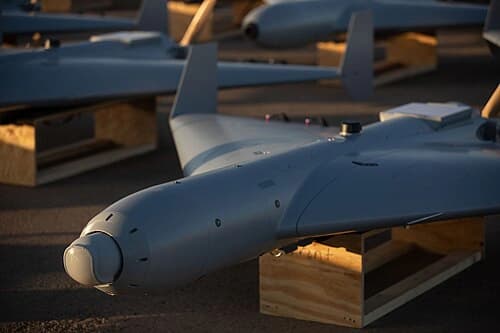
The U.S. just turned Iran's own weapon against it.
In the early hours of February 28, 2026, the U.S. military deployed LUCAS drones — essentially reverse-engineered clones of Iran Shahed-136 kamikaze drones — as part of Operation Epic Fury, a joint U.S.-Israel strike campaign targeting Iran.
LUCAS stands for Low-Cost Unmanned Combat Attack System. Each drone costs around $35,000 — a fraction of the price of traditional precision munitions. That price point matters. The Pentagon can deploy hundreds or thousands in a single campaign.
The U.S. version improves on the original. It is lighter. It carries a more explosive warhead. It achieves a range of about 500 miles with up to six hours of endurance.
But the key addition is AI-driven autonomous navigation. The drones incorporate inertial guidance, satellite capability including Starlink integration for mid-flight retargeting, and jam resistance.
Most significantly: autonomous coordination enabling swarm tactics. Multiple LUCAS drones can communicate with each other, coordinate attacks, and overwhelm air defenses in numbers.
The strategic implications are significant.
Iran pioneered the Shahed-136 design — cheap, long-range drones that loiter over targets before striking. Russia used them extensively in Ukraine. Iran-backed militants used them against U.S. forces and merchant vessels in the Middle East.
Now the U.S. has taken that same playbook and improved it with AI.
The cost asymmetry is stark. A $35,000 drone forcing a $1 million missile intercept is economics the defense industry cannot ignore. Swarm tactics multiply the problem — overwhelming air defenses not with one drone but with dozens moving in coordinated patterns.
Task Force Scorpion Strike was set up to mass-produce these drones. The first combat use just happened.
This is not just about one strike. It represents a shift in how the U.S. thinks about unmanned warfare. Cheap, AI-enhanced, swarm-capable drones that can be built in large numbers. Drones that think, coordinate, and adapt mid-flight.
The days of expensive single missiles taking out single targets may be ending. The future is swarms.
Sources
- The War Zone: U.S. Military Used LUCAS Drones in Combat (February 2026)
- Military Times: LUCAS first combat use (February 2026)
- Business Today: Inside LUCAS drone (March 2026)
- DroneXL: Operation Epic Fury (February 2026)