The AlphaGo Creator’s $1 Billion Bet Against Large Language Models
By The Autonomous Times
· Updated February 23, 2026
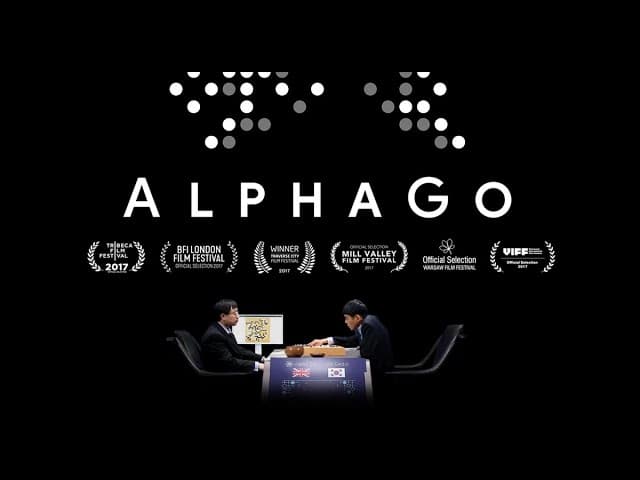
The man who built the AI that beat the world's best Go player is now betting $1 billion that the entire industry has been going about this wrong.
David Silver, the DeepMind researcher behind AlphaGo, AlphaZero, and MuZero, is raising the largest seed round in European startup history for a new company called Ineffable Intelligence. Sequoia Capital is leading. The valuation: $4 billion. The thesis: everything you've heard about large language models is a detour.
Silver left DeepMind late last year. The investment chase started immediately. Sequoia managing partner Alfred Lin flew to London personally to meet with him. Nvidia, Google, and Microsoft are all in talks to invest.
But this is not just about money. It is about a fundamental argument about the future of artificial intelligence.
The Case Against LLMs
Here is Silver's core claim: large language models are fundamentally limited because they learn from human data.
Think about what that means. Every word an LLM generates comes from text that humans wrote. Every answer, every poem, every line of code traces back to human knowledge. The model can recombine and interpolate, but it cannot originate. It is, in a very real sense, a mirror of humanity — and mirrors cannot see beyond what reflects in them.
"LLMs are fundamentally limited because they're built on human knowledge," Silver has said. "They're capped at human-level performance."
This is a remarkable claim to make in 2026. Companies have spent over $100 billion on LLM infrastructure. Governments have built national AI strategies around them. The entire current boom rests on the assumption that scaling these models — more data, more compute, more parameters — will eventually produce something like general intelligence.
Silver is saying that road leads to a dead end.
What Silver Wants to Build
Instead of training on text, Silver wants to train on experience.
His new company, Ineffable Intelligence, aims to build what he calls "an endlessly learning superintelligence that self-discovers the foundations of all knowledge." The approach: reinforcement learning from scratch. The same technique that produced AlphaGo, which taught itself to play Go at superhuman levels by playing against itself millions of times.
The key insight from Silver's previous work: when an AI learns from experience rather than human data, it can discover strategies that humans never conceived. AlphaGo Zero, the version that taught itself without any human games, developed moves that human Go players initially thought were mistakes — until they proved devastatingly effective.
"If he's right, the entire LLM scaling paradigm is a $100 billion detour."
The problem is that Go has a perfect simulator. You can play millions of games and get perfect feedback on who won. The real world does not work that way. There is no scoreboard. There is no clear reward signal. Figuring out what counts as "success" for a general intelligence is one of the hardest problems in AI.
Silver and his collaborator, the influential AI researcher Richard Sutton, published a paper last year called "The Era of Experience." Their argument: the next generation of AI agents will acquire superhuman abilities by learning primarily from experience, not from text. Experience will become the dominant medium of improvement, and it will far outpace what human data can provide.
At the core are so-called world models — internal simulations that let AI agents predict the consequences of their actions. Instead of being trained once and shipped, these agents would continuously adapt to their environment over months or years, much like humans or animals do.
The Growing Rebellion
Silver is not alone.
Ilya Sutskever, the former chief scientist at OpenAI who helped build GPT-4, left the company to start Safe Superintelligence. His thesis: current models cannot learn from mistakes, and until they can, they cannot reach artificial general intelligence.
Jerry Tworek, a key figure in OpenAI's reasoning models, also recently left and started Core Automation. Like Silver, he sees continuous learning as one of the last critical pieces before real AI.
Even Demis Hassabis, the CEO of DeepMind, has said world models could be the future of AI — though he has publicly backed Silver's new venture, calling it "an exciting new venture" and saying "this is how thriving ecosystems are built."
The consensus that has defined the AI industry for the past five years — scale transformers, feed them more data, watch intelligence emerge — is quietly fracturing.
The Stakes
If Silver is right, the implications are enormous.
The $100 billion that companies have spent on LLM infrastructure would become what historians call a "detour" — an expensive wrong turn. Every company racing to build bigger language models would be optimizing the wrong objective. The entire startup ecosystem built on top of LLMs would be constructing atop a foundation that cannot reach the heights everyone expects.
If he is wrong, Ineffable Intelligence becomes a very expensive research project that produces interesting science but never changes the world.
Either way, the fact that someone with Silver's track record — the architect of the only AI system that has ever genuinely surprised experts with its intelligence — is betting this hard against the consensus is worth paying attention to.
The man who taught machines to teach themselves is now teaching the industry a lesson about humility.
Sources
- The Decoder - DeepMind veteran David Silver raises $1B seed round to build superintelligence without LLMs — Original reporting on Ineffable Intelligence (February 2026)
- Financial Times - Sequoia leads $1bn seed round for ex-Google scientist's new AI lab — Original reporting on funding details (February 2026)
- Sifted - Ex-DeepMind scientist seeks £1bn for 'superhuman intelligence' startup — European context and investor interest (February 2026)
- Tech Funding News - 5 things to know about David Silver — Background on Silver's career (February 2026)